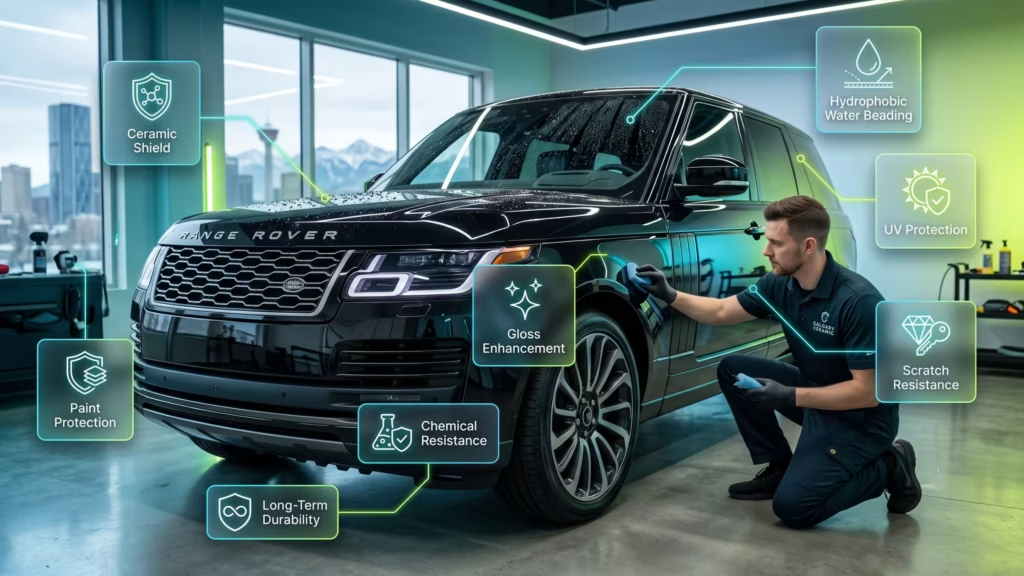
Ceramic coating Calgary is a liquid polymer applied to your vehicle’s paint that bonds at the molecular level. It creates a hard, glossy layer that resists road salt, UV rays, and Chinook temperature swings. Professional application typically lasts two to five years and costs between $600 and $1,800, depending on vehicle size and coating grade.
Key Takeaways
- Calgary’s road salt season runs roughly six months a year, making ceramic coating a practical defense rather than a luxury upgrade.
- Professional-grade coatings outperform consumer sprays because they use higher SiO2 concentrations and proper paint correction beforehand.
- Ceramic coating reduces washing time by up to 50 percent because dirt and grime release faster from the slick surface.
- The best application windows in Calgary are late spring and early fall, when temperatures stay in the coating’s cure range.
- A ceramic coating does not stop rock chips or scratches, so drivers who take gravel roads often should also consider paint protection film.
Your car’s paint takes a beating in Calgary. Road salt eats away at the clear coat every winter. Chinook winds swing temperatures by 20 degrees in a single afternoon. Gravel roads chip paint on every trip to the mountains.
You bought a car to enjoy it, not to babysit it. Years of installing coatings on Calgary vehicles have shown us which products survive our climate and which ones fail by March. This guide shares what actually works.
You will learn what ceramic coating is, why Calgary’s weather makes it worth the investment, and how much it costs. You will also learn how to pick an installer, avoid common mistakes, and keep your coating protected for years.
What Is Ceramic Coating?
Ceramic coating is a liquid polymer made mostly of silicon dioxide. Once applied, it cures into a semi-permanent layer bonded to your car’s clear coat. This layer sits on top of the paint and acts as a sacrificial shield against dirt, chemicals, and sun damage.
How Ceramic Coating Works
The coating fills microscopic pores in your clear coat. As it cures, it forms a hard, glass-like layer through a chemical reaction called cross-linking. This layer is measured in microns, but its hardness rivals automotive glass.
Unlike wax, which sits loosely on the surface, ceramic coating bonds chemically. That bond is why it lasts years instead of weeks.
Ceramic Coating vs. Traditional Paint Protection
Traditional options like wax and sealant work by filling in small imperfections temporarily. They break down within weeks under UV exposure and washing. Ceramic coating instead creates a permanent molecular bond, so it resists heat, chemicals, and water far longer.
Understanding SiO2, Graphene, and Nano Ceramic Technology
SiO2 (silicon dioxide): the core ingredient in most ceramic coatings, prized for hardness and UV resistance. Graphene coatings add carbon-based compounds that improve heat dissipation and add a slight self-healing property to light swirl marks. Nano ceramic refers to the microscopic particle size that lets the coating fill paint pores more evenly, improving gloss and bond strength.
Why Calgary Drivers Need Ceramic Coating
Calgary’s climate is uniquely hard on vehicle paint. Few Canadian cities combine heavy road salt, intense UV exposure, and rapid temperature swings the way Calgary does.
Road Salt and De-Icing Chemicals
The City of Calgary spreads salt and brine on roads for roughly five to six months each winter. These de-icing chemicals cling to paint and accelerate oxidation if left unwashed. A ceramic coating creates a barrier that keeps salt from bonding directly to the clear coat, so it rinses away instead of eating in.
High UV Exposure
Calgary sits at a high altitude and gets over 2,300 hours of sunshine a year, among the highest of any major Canadian city (Source: Environment and Climate Change Canada). That much UV exposure fades and oxidizes unprotected paint within a few seasons. Ceramic coating includes UV inhibitors that slow fading and keep color looking deeper for longer.
Chinook Temperature Swings
Chinook winds can raise temperatures by 20 degrees Celsius in hours, then drop them again just as fast. This constant expansion and contraction stresses your clear coat and can cause micro-cracking over time. A properly cured ceramic coating flexes with these swings better than bare paint, reducing stress-related damage.
Gravel Roads and Paint Damage
Many Calgary drivers head to the mountains or acreages on gravel roads regularly. Loose stones chip paint and leave fine scratches that trap dirt and moisture. While ceramic coating will not stop a direct rock chip, it does reduce fine scratching and makes chipped areas easier to spot and repair early.
Year-Round Environmental Contaminants
Calgary vehicles face bird droppings, tree sap, bug splatter, and industrial fallout throughout the year. These contaminants are acidic and can etch into unprotected clear coat within hours in summer heat. Ceramic coating’s slick surface keeps these substances from bonding, giving you more time to wash them off safely.
Benefits of Ceramic Coating
A quality ceramic coating pays off in protection, appearance, and time saved. Here is what most Calgary owners notice first.
Superior Paint Protection
Ceramic coating adds a hard, chemical-resistant layer over your factory clear coat. This layer resists chemical etching, oxidation, and minor scuffs far better than wax or sealant. Owners typically see less swirl marking after a full season of coating protection.
Hydrophobic Water Repellency
Coated paint becomes hydrophobic, meaning water beads up and rolls off instead of sitting on the surface. This matters in Calgary, where sudden rain followed by freezing temperatures can otherwise lead to water spotting and ice adhesion. Beading water also carries away loose dirt as it rolls, keeping the surface cleaner between washes.
Enhanced Gloss and Color Depth
The coating fills in microscopic imperfections in the clear coat, creating a smoother, more reflective surface. Owners often describe the result as a wet-look shine that lasts well beyond a fresh wax job. Dark colors especially show deeper, richer tones once coated.
Easier Vehicle Maintenance
Because dirt and grime cannot bond to the surface, coated cars wash faster and use less product. Most owners report cutting wash time nearly in half. Bugs and tar also lift off with far less scrubbing, which reduces the risk of scratching the paint during cleaning.
Long-Term Value and Resale Benefits
Well-maintained paint holds resale value better than paint with swirl marks, fading, or salt etching. A documented ceramic coating history can be a selling point for buyers who care about vehicle condition. For lease returns, avoiding fine scratches and oxidation can also help you avoid excess wear charges.
What Ceramic Coating Protects Against
Ceramic coating is strong, but it is not a magic shield. Knowing exactly what it does and does not stop helps you set realistic expectations.
UV Rays, Oxidation, and Fading
UV inhibitors in the coating absorb and reflect sunlight before it can break down the clear coat’s molecular structure. This slows the fading and chalky oxidation that untreated paint develops after a few Calgary summers. Darker vehicles benefit the most, since they show fading and heat damage more visibly.
Chemical Contaminants and Environmental Fallout
Bird droppings, tree sap, and road grime are acidic and can etch paint within hours in direct sun. The coating’s chemical resistance buys you time to wash these contaminants off before they cause permanent damage. This is especially useful if your vehicle sits outdoors near trees or industrial areas.
Water Spots and Light Staining
Because coated surfaces are hydrophobic, water sheets off quickly instead of pooling and drying into mineral spots. This matters in Calgary’s hard water areas, where spotting is common after rain or sprinkler exposure. Light staining from these deposits becomes easier to wipe away rather than needing polishing.
What Ceramic Coating Cannot Protect Against
Ceramic coating will not prevent rock chips, deep scratches, or dents from gravel and debris impact. It also will not stop rust once the metal is exposed underneath damaged paint. For drivers who frequently take gravel roads or highways, pairing ceramic coating with paint protection film on high-impact areas offers more complete coverage.
Ceramic Coating vs. Other Paint Protection Options
Choosing the right protection depends on your budget, driving habits, and how long you plan to keep the vehicle. Here is how the main options compare.
Ceramic Coating vs. Car Wax
Car wax is affordable and easy to apply, but it breaks down within four to eight weeks under normal driving conditions. Ceramic coating costs more upfront but lasts years, not weeks, and resists chemicals that wax cannot handle. For Calgary’s long salt season, wax simply cannot keep up with reapplication needs.
Ceramic Coating vs. Paint Sealant
Paint sealant is a synthetic product that lasts longer than wax, typically three to six months. It offers moderate chemical resistance but still sits on top of the clear coat rather than bonding to it. Ceramic coating outlasts sealant by several years and provides noticeably stronger scratch and chemical resistance.
Ceramic Coating vs. Paint Protection Film (PPF)
Paint protection film (PPF) is a thick, clear urethane film applied to high-impact areas like the hood, mirrors, and bumper. It physically absorbs rock chips and scratches, something ceramic coating cannot do. PPF costs significantly more than ceramic coating and is usually applied only to specific panels rather than the whole vehicle.
Which Option Is Best for Calgary Drivers?
For most daily drivers, a full ceramic coating offers the best balance of cost and protection against salt, sun, and grime. Drivers who frequently take gravel highways to the mountains should consider adding PPF to the front bumper, hood, and mirrors. New vehicle owners planning long-term ownership often benefit most from combining both.
Can Ceramic Coating and PPF Be Used Together?
Yes, ceramic coating can be applied over PPF to add gloss, hydrophobic properties, and easier cleaning. This combination gives you impact protection from the film and chemical, UV, and water protection from the coating. Many Calgary installers, including our team, offer this combined package for high-value or frequently driven vehicles.
How to Choose the Right Ceramic Coating
Not all ceramic coatings are built the same. Understanding the differences helps you avoid paying for a product that will not survive Calgary winters.
Professional-Grade vs. Consumer-Grade Coatings
Professional-grade coatings use higher concentrations of SiO2 and require proper paint correction before application. Consumer-grade sprays and kits are easier to apply at home, but they typically last only a few months and offer weaker chemical resistance. For Calgary’s harsh salt season, professional-grade coatings deliver far more reliable protection over multiple years.
Ceramic vs. Graphene Coatings
Standard ceramic coatings rely on silicon dioxide for hardness and gloss. Graphene coatings add carbon layers that improve heat resistance and reduce the chance of water spotting in direct sunlight. Graphene options usually cost slightly more but perform well for owners who want the latest coating technology.
Choosing the Right Coating Based on Vehicle Ownership
Owners planning to keep a vehicle for five or more years benefit most from a multi-year, professional-grade coating package. Lease drivers or those planning to sell within two years may prefer a mid-tier coating that still protects resale value without the premium price. New vehicle buyers should consider coating early, before paint is exposed to a full winter of salt.
Professional Ceramic Coating Application Process
A proper installation involves several steps, each critical to how long the coating lasts. Skipping any step shortens the coating’s lifespan significantly.
Vehicle Inspection and Paint Thickness Measurement
Technicians start by measuring paint thickness across every panel using a paint depth gauge. This step identifies areas with prior repairs or thin paint that need extra care during correction. It also sets a baseline to confirm no damage occurs during the process.
Washing and Surface Decontamination
The vehicle receives a thorough wash followed by a decontamination treatment using a clay bar or chemical iron remover. This step strips away embedded brake dust, tar, and mineral deposits that a normal wash cannot remove. A clean, contaminant-free surface is essential for the coating to bond properly.
Paint Correction
Paint correction uses machine polishing to remove swirl marks, light scratches, and oxidation before coating. This step matters most, since ceramic coating locks in whatever condition the paint is in when applied. Skipping correction means sealing in existing imperfections for years. If your paint needs more extensive work first, our full detailing service in Calgary covers complete correction before any coating is applied.
Ceramic Coating Installation
The coating is applied panel by panel using applicator pads, then leveled to prevent high spots or streaking. Technicians work in a controlled, dust-free environment to avoid contamination during the curing process. Multiple layers may be applied depending on the product and package selected.
Curing and Initial Aftercare
Initial curing takes 24 to 48 hours, though full hardness develops over one to two weeks. During this window, the vehicle should stay dry and avoid direct sun exposure for extended periods. Most installers recommend no washing for at least seven days after application.
DIY vs. Professional Ceramic Coating
DIY kits are tempting for their lower price, but the results rarely match professional application. Here is how the two options really compare.
Cost Comparison
DIY ceramic coating kits typically cost $50 to $200, while professional application in Calgary ranges from $600 to $1,800. The gap reflects the paint correction, controlled environment, and higher-grade product used professionally. DIY kits also require repeat purchases every few months, adding to the long-term cost.
Durability and Performance
Professional coatings last two to five years, depending on the product and maintenance. DIY kits typically last three to six months before performance noticeably drops. The shorter lifespan often makes DIY coatings more expensive over time despite the lower upfront cost.
Tools and Skill Requirements
Professional application requires paint correction tools, controlled lighting, and experience in reading paint conditions. Without these, DIY applicators risk trapping dust or streaks into the coating, creating a permanent flaw. Most DIY results also lack the even, ultra-thin application that professional tools achieve.
Which Option Is Best for Your Vehicle?
DIY coatings suit budget-conscious owners looking for short-term protection on an older vehicle. Newer, leased, or higher-value vehicles benefit more from professional application, where the investment protects resale value. If gloss, longevity, and a flawless finish matter to you, professional installation is worth the extra cost.
Ceramic Coating Cost in Calgary
Ceramic coating cost in Calgary generally ranges from $600 to $1,800, depending on vehicle size, coating grade, and paint condition. Larger vehicles and multi-year packages sit at the higher end of that range.
Factors That Influence Pricing
Vehicle size, paint condition, and coating brand all affect final pricing. Trucks and SUVs cost more than sedans due to surface area. Vehicles needing heavy paint correction before coating also add labor time and cost.
Why Paint Correction Affects Cost
Paint correction can take anywhere from two to ten hours, depending on how much swirling or oxidation exists. Heavier correction requires more polishing stages and compounds, which increases labor cost significantly. Skipping needed corrections to save money often shortens the coating’s overall lifespan.
Comparing Ceramic Coating Packages
Entry-level packages typically include a one-layer coating rated for one to two years of protection. Mid-tier packages add extra layers and often extend protection to three years with better gloss retention. Premium packages include multi-layer applications, extended warranties, and sometimes graphene formulas rated for five years or more.
Ceramic Coating Packages Compared
| Package Tier | Typical Lifespan | Best For |
| Entry-Level | 1 to 2 years | Budget-conscious owners, older vehicles |
| Mid-Tier | 2 to 3 years | Daily drivers, most Calgary vehicles |
| Premium/Graphene | 4 to 5+ years | New vehicles, luxury cars, and long-term owners |
Optional Add-On Services
Common add-ons include wheel and caliper coating, glass coating, interior fabric protection, and PPF on high-impact panels. These extras increase upfront cost but expand protection to areas that ceramic coating on paint alone does not cover. Wheel coatings in particular help with Calgary’s heavy brake dust and road grime.
Annual Maintenance Costs
Most coated vehicles need a maintenance wash and inspection once or twice a year, costing roughly $100 to $250 per visit. This upkeep helps confirm the coating is still bonded and performing as expected. Skipping maintenance does not void protection immediately, but it can shorten the coating’s effective lifespan.
Is Ceramic Coating Worth the Investment?
For most Calgary drivers, yes, especially given the cost of paint correction or a respray later. The upfront cost is often less than a single major paint repair caused by salt damage or oxidation. Owners who plan to keep their vehicle for multiple years typically see the strongest return.
How Long Does Ceramic Coating Last?
Lifespan depends heavily on the coating grade, application quality, and how well you maintain it afterward. Most professional coatings last between two and five years in Calgary conditions.
Average Lifespan by Coating Type
Entry-level coatings typically last one to two years, while mid-tier options last two to three years. Premium and graphene coatings can last four to five years or more with proper care. DIY spray coatings generally last only three to six months by comparison.
How Calgary’s Climate Affects Longevity
Heavy salt exposure, intense UV, and frequent freeze-thaw cycles all shorten coating lifespan compared to milder climates. Vehicles parked outdoors year-round tend to see faster wear than those garaged overnight. Regular maintenance washing becomes even more important in Calgary to offset these climate stresses.
Signs Your Ceramic Coating Needs Maintenance
Watch for water no longer beading tightly, dulling gloss, or dirt sticking more than it used to. These are signs that the hydrophobic layer is wearing thin and may need a maintenance spray or reapplication. Catching these signs early prevents contaminants from reaching the bare clear coat underneath.
How to Maintain Ceramic Coating
Proper maintenance protects your investment and keeps the coating performing at its best for years. These habits matter most in Calgary’s demanding climate.
Proper Washing Techniques
Use the two-bucket method with pH-neutral soap and a microfiber wash mitt to avoid introducing scratches. Always rinse the vehicle first to loosen loose dirt before touching it with a mitt. Dry with a clean microfiber towel or a leaf blower to avoid water spotting.
Winter Care Tips
Rinse the undercarriage and lower panels frequently during salt season to prevent buildup in hard-to-reach areas. A touchless or hand-wash bay works better than automatic brush washes, which can introduce fine scratches. Applying a maintenance spray before winter adds an extra layer of hydrophobic protection.
Seasonal Maintenance Schedule
Spring calls for a full decontamination wash to remove winter salt residue and grime buildup. Summer maintenance focuses on bug and tar removal before it bonds under UV heat. Fall is the ideal time for a maintenance coating spray ahead of the coming winter.
Removing Water Spots Safely
Use a pH-neutral detailing spray and microfiber towel rather than scrubbing water spots with abrasive pads. For stubborn mineral deposits, a diluted water spot remover designed for coated paint works best. Avoid dish soap, which strips the coating’s hydrophobic properties over time.
Decontamination Washes
A decontamination wash every four to six months removes embedded brake dust, tar, and industrial fallout that the coating cannot fully repel. This keeps the surface smooth and preserves the coating’s gloss and slickness. Skipping decontamination allows contaminants to build up and dull the finish over time.
Common Mistakes That Reduce Coating Lifespan
Even a great coating can fail early if it is not cared for correctly. Avoid these common errors.
- Using automatic brush car washes: the stiff bristles introduce fine scratches and swirl marks over time.
- Using harsh chemicals: dish soap and degreasers strip the coating’s hydrophobic layer and reduce protection.
- Improper washing techniques: dry wiping or using dirty towels grinds grit into the clear coat.
- Skipping routine maintenance: neglecting seasonal washes lets contaminants build up and shorten coating life.
Best Time to Apply Ceramic Coating in Calgary
Timing your application around Calgary’s seasons helps the coating cure properly and perform at its best.
Spring
Spring is one of the best windows, since temperatures stabilize and the salt season has ended. Applying after a full decontamination wash removes winter grime before sealing in protection. This timing also sets up your vehicle for summer sun and bug season.
Summer
Summer offers stable, warm temperatures ideal for curing, though extreme heat waves should be avoided during application. Booking early morning appointments helps installers control surface temperature during the process. The summer application also protects against peak UV exposure right away.
Fall
Fall is the top recommended season, since it prepares your paint for the coming salt and snow season. Cooler, stable temperatures support proper curing before winter driving begins. Booking in September or October gives the coating time to fully harden before the first snowfall.
Winter
Winter application is possible but less ideal, since cold temperatures slow the curing process significantly. Indoor, climate-controlled facilities can still deliver good results if timing is tight. Most installers recommend waiting for a warmer window when possible rather than rushing a winter install.
Which Vehicles Benefit Most from Ceramic Coating?
While any vehicle can benefit, some owners see a bigger return on the investment than others.
New Vehicles
Coating a new vehicle before its first winter protects factory paint from any damage occurs. This is the ideal time to apply, since paint correction is rarely needed on new paint. Early protection also helps maintain resale value from day one.
Used Vehicles
Used vehicles often need paint correction first to address existing swirl marks or oxidation. Once corrected, coating helps stop further damage and can noticeably improve the vehicle’s appearance. This combination works well for owners planning to keep a used vehicle long-term.
Luxury and Performance Vehicles
High-value vehicles benefit from the added gloss, depth, and protection that ceramic coating provides. Owners of these vehicles often pair coating with PPF for maximum protection against chips and swirls. The investment aligns well with the higher value being protected.
Daily Drivers
Daily drivers face the most cumulative exposure to salt, sun, and road grime. Ceramic coating reduces wash time and keeps the vehicle looking newer despite daily use. This makes it one of the most practical upgrades for commuter vehicles in Calgary.
Trucks and SUVs
Larger vehicles have more surface area exposed to gravel roads, salt spray, and UV. Coating helps protect larger painted panels and simplifies washing, given their size. Owners who tow or drive off-pavement regularly often see the most noticeable benefit.
Electric Vehicles
EV owners often want to preserve their vehicle’s appearance, given the higher purchase price. Ceramic coating protects paint without interfering with sensors or charging components. The reduced need for frequent washing also suits owners focused on efficiency and low maintenance.
How to Choose a Ceramic Coating Installer in Calgary
Not every installer delivers the same quality. Ask the right questions before booking.
Certifications and Experience
Look for installers certified by recognized coating manufacturers, which confirms proper training on application standards. Years of hands-on experience with Calgary’s specific climate challenges also matter more than certification alone. Ask to see before-and-after photos of past work.
Paint Correction Expertise
Since correction determines the final finish, ask how the installer assesses and corrects paint before coating. Experienced technicians should explain their process for measuring paint thickness and choosing correction steps. Rushed or skipped correction is a red flag for lower-quality work.
Ceramic Coating Brands Offered
Reputable installers typically offer name-brand professional coatings rather than unbranded or unknown products. Ask which brand they use and why they chose it for Calgary conditions. This transparency is a good sign of an installer who understands the product they are applying.
Warranty Coverage
A confident installer backs their work with a written warranty covering defects and performance issues. Warranty length and terms vary, so ask exactly what is covered and for how long. Avoid installers unwilling to put warranty terms in writing.
Questions to Ask Before Signing a Ceramic Coating Contract
Before booking, ask these key questions:
● How many layers of coating are included in this package?
● What paint correction is included, and how is it assessed?
● What does the warranty cover, and what voids it?
● How long is the curing period, and what aftercare is required?
● Can I see reviews or photos from past Calgary customers?
Ceramic Coating Warranty Explained
A warranty protects your investment if the coating fails to perform as promised. Understanding the terms helps you avoid losing coverage by accident.
What Professional Warranties Cover
Most warranties cover loss of hydrophobic properties, gloss reduction, and premature coating failure under normal use. Coverage length typically matches the coating tier, ranging from one to five years. Always get the specific coverage terms in writing before your appointment.
What Can Void Your Warranty
Using automatic brush car washes, harsh chemicals, or skipping recommended maintenance washes can void coverage. Unauthorized paint work or accident repairs after coating may also affect warranty status on affected panels. Always check your warranty terms before making changes to your vehicle’s paint.
How to Maintain Warranty Eligibility
Keep records of maintenance washes and any inspections performed by your installer. Follow the recommended washing methods and schedule outlined in your warranty paperwork. Reaching out to your installer with questions before trying a new product also helps protect your coverage.
Conclusion
Ceramic coating gives Calgary drivers real protection against the conditions that damage paint fastest: road salt, intense UV, and Chinook temperature swings. It will not stop every rock chip, but it dramatically reduces oxidation, staining, and fine scratching compared to unprotected paint. Choosing the right grade and a qualified installer makes the biggest difference in how long that protection lasts.
Throughout this guide, we covered what ceramic coating is, why Calgary’s climate makes it worthwhile, and how to choose between DIY and professional application. We also walked through realistic pricing, maintenance habits, and the questions to ask before signing with an installer. At Steam Clean Auto Detailing, we have applied professional-grade ceramic coatings on vehicles across Calgary and understand exactly how our winters test these products.
If you are ready to protect your paint before the next salt season hits, we would be glad to help. Visit our Full detailing service in Calgary to book a consultation or request a quote. We will walk you through the right package for your vehicle, your budget, and how you actually drive.
Frequently Asked Questions
How long does ceramic coating last in Calgary?
Most professional ceramic coatings last two to five years in Calgary, depending on the product grade. Harsh winters with heavy salt exposure can shorten lifespan slightly compared to milder climates. Regular maintenance washing helps the coating reach its full expected lifespan.
Is ceramic coating worth it in a cold climate like Calgary?
Yes, ceramic coating is especially useful in Calgary because it resists road salt, de-icing chemicals, and UV damage. These are the exact conditions that cause the fastest paint deterioration locally. Most owners find the upfront cost worthwhile compared to repairing salt-damaged paint later.
Can I wash my car normally after ceramic coating?
Yes, but wait at least seven days after application before the first wash. After that, use pH-neutral soap, a microfiber mitt, and avoid automatic brush car washes. Hand washing or touchless washes protect the coating best.
Does ceramic coating stop rock chips from gravel roads?
No, ceramic coating protects against chemical and UV damage, not physical impacts like rock chips. For gravel road protection, pairing ceramic coating with paint protection film on high-impact panels offers better coverage. This combination is popular among Calgary drivers who frequently head to the mountains.
How much does ceramic coating cost in Calgary?
Professional ceramic coating in Calgary typically costs between $600 and $1,800. Price depends on vehicle size, coating grade, and how much paint correction is needed beforehand. DIY kits cost less upfront but require far more frequent reapplication.
Can ceramic coating be applied over paint protection film?
Yes, applying ceramic coating over PPF adds gloss, hydrophobic properties, and easier cleaning. This combination gives both impact protection and chemical or UV resistance. Many Calgary installers offer this as a combined package for higher-value vehicles.